Explore Paradise Valley Resort Lifestyle and Homes
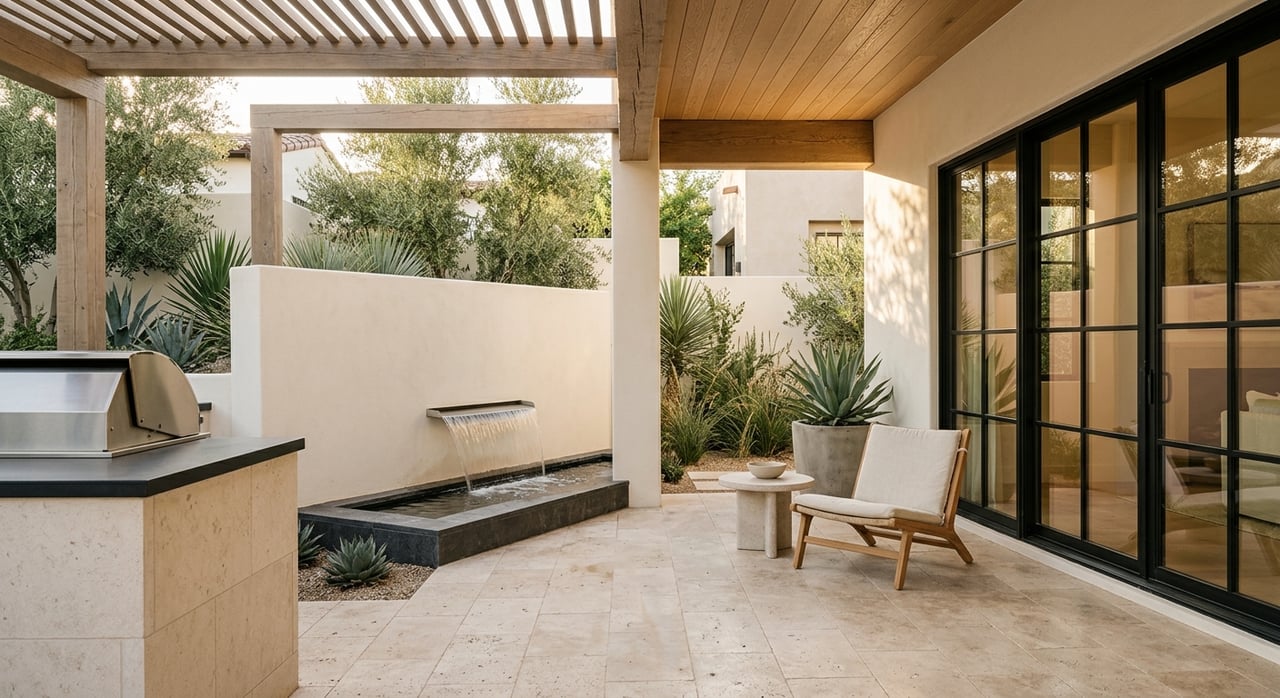
If you are drawn to Paradise Valley for its spas, golf, mountain views, and polished dining scene, you are not alone. Many buyers want the ease of a resort lifestyle without actually living inside a resort property. The good news is that Paradise Valley is built around exactly that balance, with a primarily residential setting shaped by nearby hospitality, recreation, and open desert character. Let’s take a closer look at how the resort lifestyle connects to the homes around it.
Paradise Valley is both a residential town and a resort destination. According to the Town of Paradise Valley, it has about 12,774 residents across 15.4 square miles, is predominantly zoned for single-family housing, and is home to 9 resorts and 3 golf courses. The town also describes itself as a quiet desert oasis framed by Camelback Mountain, the Phoenix Mountain Preserve, and the McDowell Mountains, with about 294 sunny days per year. You can review those details on the town's basic facts page.
That mix is not accidental. The town's 2022 General Plan describes Paradise Valley as a premier residential community and a resort destination, while emphasizing preservation of its low-density, semi-rural character. In practical terms, that means you can enjoy resort-oriented amenities nearby while still living in a setting designed first for single-family homes.
Paradise Valley's resort scene is concentrated enough that certain streets stand out when you begin your home search. Based on the town's resort directory, resort-adjacent corridors are especially visible along Lincoln Drive, McDonald Drive, Palo Cristi Road, and Scottsdale Road. For buyers, these areas often come up when the goal is close access to dining, spa services, golf, and hospitality amenities.
The resort lineup includes JW Marriott Camelback Inn, Mountain Shadows, Omni Scottsdale Resort & Spa at Montelucia, Sanctuary Camelback Mountain, Hermosa Inn, SmokeTree Resort, Scottsdale Plaza Resort, Andaz Scottsdale Resort and Bungalows, and DoubleTree Resort. This concentration helps explain why Paradise Valley has such a distinct live-near-the-resort feel, even for owners who never plan to book a guest room.
In Paradise Valley, resort living is less about a single property and more about the rhythm of daily life around you. It can mean a quick dinner at a nearby resort restaurant, a spa appointment close to home, a golf outing without a long drive, or easy access to hiking and mountain views.
Several resorts highlight the kinds of amenities that shape that lifestyle. JW Marriott Camelback Inn Resort & Spa advertises a spa, restaurants, outdoor pools, tennis, on-site golf, and a shuttle to championship courses. The research also notes that Omni Montelucia offers a full-service spa, three pools, six dining outlets, hiking and biking, and event space, while Sanctuary features a 12,000-square-foot spa, dining, pools, tennis, pickleball, hiking trails, and recurring culinary and wellness events.
Dining is part of the same experience. The town's visiting page lists restaurants such as Lincoln Steakhouse and Rita's Kitchen, Prado, Asadero Cocina and Cantina, JD's Restaurant, Lon's Restaurant, elements, El Chorro, Weft and Warp Art Bar + Kitchen, and Hearth '61 and Rusty's. For many homeowners, that means you can enjoy high-quality food and social settings nearby without leaving Paradise Valley.
Golf is another key reason buyers focus on Paradise Valley's resort corridors. The town's golf page lists Marriott Camelback Golf Club, Mountain Shadows Short Course, and Paradise Valley Country Club. For buyers who want recreation built into the area, these options help define the day-to-day appeal.
If you are comparing Paradise Valley to other luxury markets, this matters. Golf here is not tucked far away from residential life. It is woven into the same setting as the resorts, mountain views, and dining destinations that give the town its signature feel.
One of the biggest surprises for some buyers is that Paradise Valley does not read like a typical resort market. The town's Residents Guide explains that Paradise Valley is primarily zoned for single-family residential use, usually one home per lot, and that most of the town is zoned R-43, which generally means minimum one-acre lots.
The same guide notes other residential districts such as R-175, R-35, R-18, and R-10, along with non-conforming lots, cluster developments, and some smaller residential lots within resort Special Use Permit properties. The General Plan also references five-acre estate lots. Together, these details point to a housing pattern defined more by custom homes, estate properties, and low-density living than by dense subdivisions.
That low-density structure is a major part of the Paradise Valley experience. Even when you live near a resort corridor, you are often still looking at a residential environment shaped by larger lots, custom architecture, and intentional spacing between homes.
For many buyers, living close to a resort offers the best of both worlds. You may get easier access to golf, spa services, restaurants, mountain trailheads, and event programming while keeping the privacy and independence of a detached home.
This can be especially appealing if you are relocating, buying a seasonal residence, or searching for a lock-and-leave property in a well-known luxury market. Paradise Valley offers a setting where hospitality amenities are part of the surroundings, but residential ownership remains the core land-use pattern.
It is also important to understand the tradeoff. The same planning framework that supports resort uses also recognizes that nearby activity can affect surrounding homes. The town's General Plan says resort revitalization proposals should address noise, traffic, parking, open space, and mountain views, with measures such as screened service areas, shielded lighting, and operational restrictions to reduce impacts on adjacent neighborhoods.
That means proximity can bring convenience, but it may also bring more movement and activity than a more interior residential location. If your priorities include quick access to dining and wellness amenities, a resort-adjacent location may feel ideal. If your focus is maximum separation from commercial activity, you may want to compare homes farther from the main resort corridors.
Some of Paradise Valley's most compelling homes sit in mountain-facing or hillside settings. If you are drawn to a property for its elevation, views, or dramatic desert backdrop, there is another local factor to keep in mind.
The town's Hillside Building Committee reviews items such as land disturbance, building height, lighting, materials, grading, and drainage for new homes, remodels, pools, solar, and accessory structures. For buyers, that means a view-oriented property may come with additional design and review considerations, especially if future changes are part of your plan.
If you are considering part-time use or future rental flexibility, do not skip this step. The town's FAQ page says short-term rentals must be rented as whole properties, cannot be used for commercial events, require a town permit before being offered for rent, require a TPT license, and must be registered with Maricopa County.
The same FAQ notes that rentals longer than 30 days do not require a town rental permit and that, effective January 1, 2025, long-term residential rentals are no longer subject to town TPT. It also states that Arizona short-term rental law does not prevent HOAs from regulating or restricting these uses through CC&Rs. In other words, if rental use matters to you, both town rules and neighborhood-level restrictions deserve close review before you buy.
Paradise Valley also offers tools that can help if you are not in residence year-round. The town's Vacation Watch program is available for temporarily unoccupied homes, with requests due at least seven days before departure and a maximum watch period of six weeks.
For seasonal owners, that kind of service is one more example of how the town supports a lifestyle that includes second homes and part-time occupancy without losing its residential focus.
If you are exploring homes near Paradise Valley's resorts, it helps to think in layers. First, identify which amenities matter most to you, such as golf, dining, spa access, or mountain proximity. Then compare how close you want to be to active corridors like Lincoln Drive or Scottsdale Road versus quieter interior streets.
It is also wise to look beyond the home itself. Zoning context, hillside review, traffic patterns, and any HOA rental rules can all shape how a property functions over time. In a town where luxury and low-density living are closely protected, those details matter.
If you want tailored guidance on Paradise Valley homes near top resort corridors, Marianne Bazan offers experienced, discreet support for buyers and sellers throughout Paradise Valley and Scottsdale.
Stay up to date on the latest real estate trends.

Finding the right home can be time-consuming and stressful. You want someone in your corner to help guide the entire process.