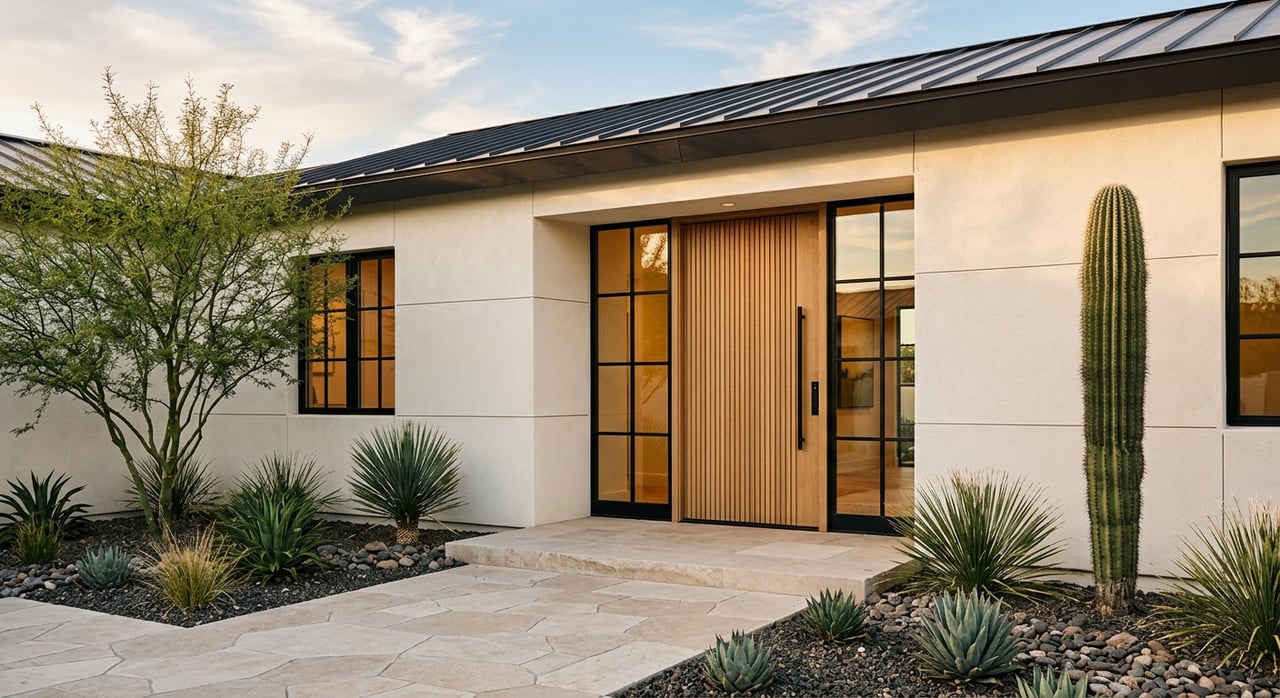
Guide to Paradise Valley New Construction Homes
If you are considering a new construction home in Paradise Valley, you are not shopping in a typical subdivision market. This is a highly regulated luxury area where lot conditions, zoning, hillside review, and utility questions can shape the entire path from purchase to move-in. The good news is that when you understand the process upfront, you can make more confident decisions about the lot, the builder, and the timeline. Let’s dive in.
Paradise Valley stands apart because of its large-lot zoning framework and detailed development standards. The town’s regulations include districts such as R-10, R-18, R-35, R-43, and R-175, each with its own lot size, setback, floor-area-ratio, and height rules, as outlined in the town’s height and area regulations.
For you as a buyer, that usually means new construction here is more custom in nature rather than mass-produced. In many cases, the opportunity is a one-off build, an infill homesite, or a tear-down and rebuild, shaped by the lot and the town’s review process.
Before you fall in love with a rendering or floor plan, make sure the lot works for what you want to build. In Paradise Valley, lot size and width requirements depend on zoning, and some parcels may require additional steps such as a lot split or subdivision plat, according to the town’s FAQ.
If a property cannot meet a required setback or height standard, a variance may be needed through the Board of Adjustment. That does not mean the project is impossible, but it does mean the path may be more involved than you first expected.
One of the first things to confirm is whether the property is considered flatland or hillside. Hillside lots in Paradise Valley go through a separate review process, and the Hillside Building Committee looks at issues such as land disturbance, grading, drainage, lighting, materials, and height.
The town notes that hillside buildings are typically limited to 24 feet. That figure is important, but it should not be applied to every property in town because non-hillside lots can allow different height limits depending on the zoning district and lot size.
Height limits in Paradise Valley depend on the lot and zoning category. According to the town’s zoning table, non-hillside primary residences are generally capped at:
You can review those standards in the official zoning ordinance. For a buyer, the practical point is simple: the lot itself can strongly influence the design, roofline, and overall livability of the finished home.
In Paradise Valley, the design team matters from the very beginning. The town’s flatland residential submittal requirements show just how detailed plan packages must be, including property lines, setbacks, easements, washes, square footage, and floor-area-ratio information.
That level of detail is one reason it helps to work with professionals who understand local documentation and review standards before plans are too far along. A team that knows the town’s process can help you avoid preventable redesigns, delays, and confusion.
Before you sign a contract, verify that your builder is properly licensed. The Arizona Registrar of Contractors provides a contractor search tool and oversees contractor licensing and regulation statewide.
This is one of the simplest due-diligence steps you can take. It gives you a basic check on the builder’s regulatory standing before you commit to a major purchase.
Utility planning is easy to overlook when the focus is on architecture and finishes, but it can affect cost, timing, and feasibility. Paradise Valley states that the town has three water providers, and some homes are connected to septic rather than sewer, as noted in the town FAQ.
For you, that means utility availability, provider boundaries, and sewer or septic conditions should be confirmed early. It is much better to understand those details before plans are finalized than after your design has already been tailored to the site.
A new construction purchase in Paradise Valley is not only about the builder’s schedule. It is also tied to the town’s permitting and inspection system. The Building Department reviews plans, issues permits, inspects construction, and requires approved and stamped plans plus permits to remain on site.
Paradise Valley also uses an online Citizen Portal for permit applications. For buyers comparing custom builds and spec opportunities, this is one reason custom construction often has a longer pre-construction runway.
The town’s FAQ provides several timing benchmarks that can help you plan:
You can find those details in the Paradise Valley FAQ. These are helpful reference points, but your overall timeline will still depend on the lot, design complexity, and whether revisions are needed.
Paradise Valley also regulates when work can happen. The town states that standard construction may not begin before 7:00 a.m. and must stop by 5:00 p.m. on weekdays and Saturday, with expanded summer hours from May 1 through October 15. The town also says heavy equipment is not allowed on Saturdays, Sundays, and legal holidays, and deliveries are limited to Monday through Saturday, according to the Building Department page.
These rules may sound like minor details, but they can influence how long a project takes and how construction logistics are managed from week to week.
Some local requirements can surprise buyers if they come up late in the process. One key example is that new homes in Paradise Valley require fire sprinklers, except for gazebos, according to the town FAQ.
That affects both planning and final completion expectations. It is one more reason why local knowledge matters when you are comparing builders, reviewing plans, and budgeting for the full scope of the project.
If you are deciding between a fully custom home and a near-complete spec home, the choice often comes down to control versus timing. A custom build gives you more say in design and site planning, but the review and permitting process can add more lead time before construction really moves.
A spec home may offer a simpler path if much of the entitlement, design, and permit work has already been completed. In Paradise Valley, where regulations are detailed and lot conditions vary, this distinction can be especially important.
Many buyers assume the builder’s written warranty is the whole story. Under Arizona law, that is not necessarily the case. In Zambrano v. M & RC II LLC, the Arizona Supreme Court held that public policy prevents a builder and buyer from disclaiming or waiving the implied warranty of workmanship and habitability, even when an express written warranty is offered.
The Court also explained that the implied warranty protects buyers and successive purchasers against latent defects that were not reasonably discoverable at the time of purchase. For you, that means the builder’s written warranty should be read as additional contract language, not as a replacement for Arizona’s implied protections.
Arizona’s statute of repose generally bars construction-related contract actions more than eight years after substantial completion, with a possible one-year extension for certain latent defects discovered in the eighth year. The statute specifically includes implied warranty claims, though it does not shorten an express written warranty.
This is a technical area, but the takeaway is practical: warranty deadlines and contract terms deserve careful review before closing, not after a problem appears.
Buying new construction in Paradise Valley can involve more moving parts than a resale purchase. You may be weighing zoning, lot constraints, hillside review, utility setup, permit timing, inspection scheduling, construction milestones, and warranty language, all at once.
That is why experienced buyer representation still matters. With a market as nuanced as Paradise Valley, clear guidance can help you ask better questions, spot issues earlier, and move through the process with more confidence.
Phoenix-area new construction activity also remains meaningful in the broader market. NAHB reported that Phoenix-Mesa-Chandler recorded 13,935 single-family permits through June 2025, and FRED data later showed 1,584 one-unit permits in January 2026. While those figures are metro-wide and not Paradise Valley-specific, they help explain why contractor availability, lead times, and pricing can stay competitive across the Valley even as Paradise Valley itself remains far more constrained.
If you are considering a custom home, a teardown opportunity, or a new spec property in Paradise Valley, working with a local advisor who understands both the market and the process can save time and reduce surprises. If you would like a private consultation, connect with Marianne Bazan for experienced, concierge-level guidance.
Stay up to date on the latest real estate trends.
Finding the right home can be time-consuming and stressful. You want someone in your corner to help guide the entire process.